


Password:gitlab
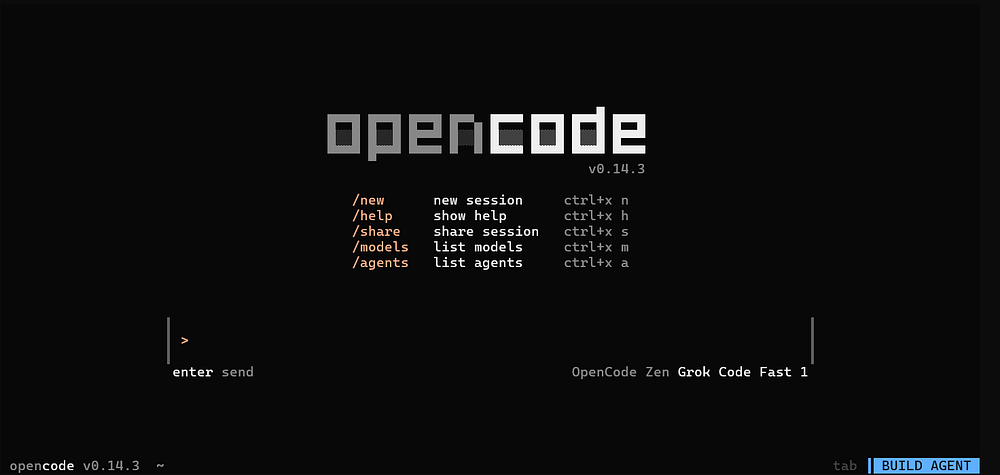
OpenCode AI is an open-source AI coding agent that helps developers write, understand, debug, refactor, and improve code. Designed for modern software development, OpenCode connects to supported AI models and provides AI-powered assistance directly within your development workflow.
Whether you are building a new application, fixing bugs, modifying existing source code, or exploring an unfamiliar repository, OpenCode can help you analyze project files, plan implementations, and work through programming tasks. It is designed to complement your existing development tools rather than replace your entire coding environment.
One of the main advantages of OpenCode is its support for multiple AI providers and compatible models. Developers can configure their preferred provider, select available models, and adapt the coding assistant to their projects and workflow. Available features and model access depend on the configured provider and installed version.
For Windows users, OpenCode can be used with supported installation methods and compatible terminal environments, including Windows Subsystem for Linux (WSL) where appropriate. This makes it a practical option for developers looking for an open-source AI coding assistant for Windows.
This page covers OpenCode AI features, Windows installation methods, AI model configuration, system requirements, troubleshooting, and frequently asked questions to help you get started.
| Feature | Description |
|---|---|
| 🤖 AI-Powered Coding | Use supported AI models to write, explain, refactor, and debug source code. |
| 💻 Codebase Understanding | Explore project files and work with existing code through an AI-assisted development workflow. |
| 🧠 Multiple AI Models | Configure supported AI providers and choose available models for different programming tasks. |
| 🔧 Code Editing | Get assistance creating, reviewing, and modifying files within your development project. |
| 🖥️ Terminal Integration | Start AI-assisted coding sessions directly from a terminal in your project directory. |
| 📂 Project Instructions | Use AGENTS.md to provide project-specific instructions, coding conventions, and development guidelines. |
| 🔌 Provider Configuration | Connect compatible AI services and configure access to supported models. |
| ⚡ Development Automation | Delegate supported coding tasks and review the resulting changes. |
| 🔓 Open-Source Software | Explore the source code and contribute through the public OpenCode repository. |
| 🛠️ Developer Productivity | Use AI assistance to investigate errors, understand unfamiliar code, and streamline repetitive programming tasks. |
OpenCode's system requirements depend on the installation method, project size, and AI model provider. When using a remote AI service, most model processing takes place outside your computer. Running AI models locally can require significantly more system memory and hardware resources.
| Component | Minimum / General Requirement |
|---|---|
| Operating System | Compatible 64-bit Windows environment; WSL is an option for Windows users |
| Processor | Compatible 64-bit Intel or AMD processor |
| RAM | Sufficient memory for Windows, development tools, project files, and running processes |
| Storage | Available space for OpenCode, project files, dependencies, and development tools |
| Graphics | A dedicated GPU is not generally required when using remote AI models |
| Internet | Required for downloading packages and accessing online AI providers |
| Additional Software | Dependencies vary according to the selected installation method |
Local AI models: Running models on your own hardware may require additional RAM, storage, and GPU memory. Actual requirements depend on model size, quantization, context length, and the inference software being used.
There are several ways to install OpenCode for Windows, depending on your environment and preferred package manager. Before installing, check the official documentation for current instructions and compatibility.
-
Install a supported version of Node.js and npm if they are not already available.
-
Open PowerShell or your preferred terminal.
-
Install the OpenCode package:
npm install -g opencode-ai
-
Navigate to your source code directory:
cd C:\path\to\your-project -
Launch OpenCode:
opencode
-
Follow the available prompts to configure an AI provider and select a supported model.
If Scoop is installed and the package is available for your environment, open a terminal and run:
scoop install opencodeIf Chocolatey is installed and supports the version you need, run:
choco install opencodePackage names and installation methods can change between releases. If a command does not work, check the official installation documentation for the current instructions.
Windows Subsystem for Linux (WSL) provides a Linux environment on Windows and can be useful for developers who prefer Linux-based development tools.
- Configure WSL and install a supported Linux distribution.
- Open the Linux terminal.
- Follow the official OpenCode installation instructions for that environment.
- Navigate to your project directory.
- Start OpenCode and configure your preferred AI provider.
OpenCode AI works with supported AI providers and compatible model configurations. It allows developers to choose from available options according to their coding needs, provider support, and budget. Installing OpenCode does not automatically provide unlimited access to every AI model or subscription.
To configure an AI provider:
- Launch OpenCode from your project directory.
- Use the
/connectcommand where supported by your installed version. - Select an available AI provider.
- Follow the provider's authentication instructions.
- Choose a model supported by your configured provider.
Depending on the service, model access may require an account, subscription, or API key. Pricing, usage limits, and model availability are determined by the provider.
OpenCode can also be configured to work with supported local AI model providers. The exact setup depends on the inference engine, model format, and provider integration.
When choosing a local language model for AI-assisted coding, consider:
- Model size: Larger models generally require more system memory.
- Quantization: Lower-precision model variants can reduce memory requirements.
- Context length: Larger contexts can increase memory consumption.
- Hardware acceleration: Supported GPUs may improve local inference speed.
- Coding performance: Results vary by model, programming language, and task complexity.
Review the official OpenCode documentation for current provider instructions and supported configurations.
OpenCode is designed to fit into existing software development workflows. You can use it alongside source editors, terminals, version-control tools, and supported AI services while working on your own projects.
For the best results, start OpenCode from the intended project directory. Clear project instructions can help communicate coding conventions, build commands, testing requirements, and architectural decisions to the AI coding agent.
For safer development:
- Review proposed code changes before accepting them.
- Inspect commands before allowing them to run.
- Keep backups or use Git version control.
- Avoid placing API keys, passwords, or private credentials in project instructions.
- Use appropriate permissions for files and directories.
- Run relevant tests after significant code changes.
OpenCode can assist with coding, debugging, and implementation, but AI-generated changes may contain errors. Review and test the results before using them in production.
If PowerShell reports that opencode is not recognized, verify that the installation completed successfully and that the executable directory is included in your PATH. Restart the terminal and check the instructions for your installation method.
Check your internet connection, provider authentication, API credentials, and account usage limits. Confirm that the selected provider and model are available to your account.
Available models depend on your configured AI provider and its current offerings. Recheck the provider configuration and select a model supported by that service.
Large AI models can consume substantial RAM and GPU memory. Consider using a smaller or quantized model, reducing the context length where appropriate, and checking that your local inference backend is configured correctly.
Launch OpenCode from the intended project directory and verify that your Windows or WSL user has the necessary file permissions. Avoid granting unnecessary access to sensitive folders.
Provide clear task instructions, include relevant error messages, and describe the expected behavior. Break complex programming tasks into smaller steps, inspect generated changes, and run relevant tests before proceeding.
OpenCode is an open-source AI coding agent that helps developers understand codebases, generate and modify code, investigate errors, and perform programming tasks with supported AI models.
Yes. Windows users can choose from supported installation options, including compatible package managers and Windows Subsystem for Linux. Check the official website for current Windows downloads and installation instructions.
OpenCode is open-source software. However, access to particular AI models may require a paid subscription, API credits, or an account with a supported provider. Costs depend on the service and model you choose.
OpenCode connects to supported AI providers and compatible model configurations. It should not be treated as a package that automatically includes unrestricted access to every AI model.
Yes, when configured with a compatible and supported local model provider. Hardware requirements depend on the model, inference software, and configuration.
A dedicated GPU is not generally required when using remote AI providers. Local AI inference may benefit from compatible GPU acceleration, depending on the selected model and runtime.
OpenCode can assist with code changes through its available tools. Review proposed changes and understand the permissions involved before accepting modifications or executing commands.
No. This page is an independent informational resource. The official project and source code are available through the OpenCode website and GitHub repository.
Visit the official OpenCode download page or check the official GitHub repository for release information and installation guidance.
- OpenCode AI for Windows
- OpenCode download for Windows
- OpenCode AI coding agent
- OpenCode installation guide
- OpenCode Windows setup
- OpenCode AI model configuration
- OpenCode supported AI providers
- OpenCode local LLM setup
- OpenCode coding assistant
- OpenCode terminal coding agent
- Open-source AI programming tools
- OpenCode troubleshooting guide
opencode opencode-ai opencode-windows ai-coding-agent coding-assistant developer-tools open-source-ai large-language-models local-llm windows-10 windows-11 programming-tools code-generation ai-models installation-guide troubleshooting
Disclaimer: This repository provides independent informational content about OpenCode. It is not affiliated with, endorsed by, or operated by the OpenCode maintainers. Product names and trademarks belong to their respective owners. Always verify software packages and release information through official project sources before installation.